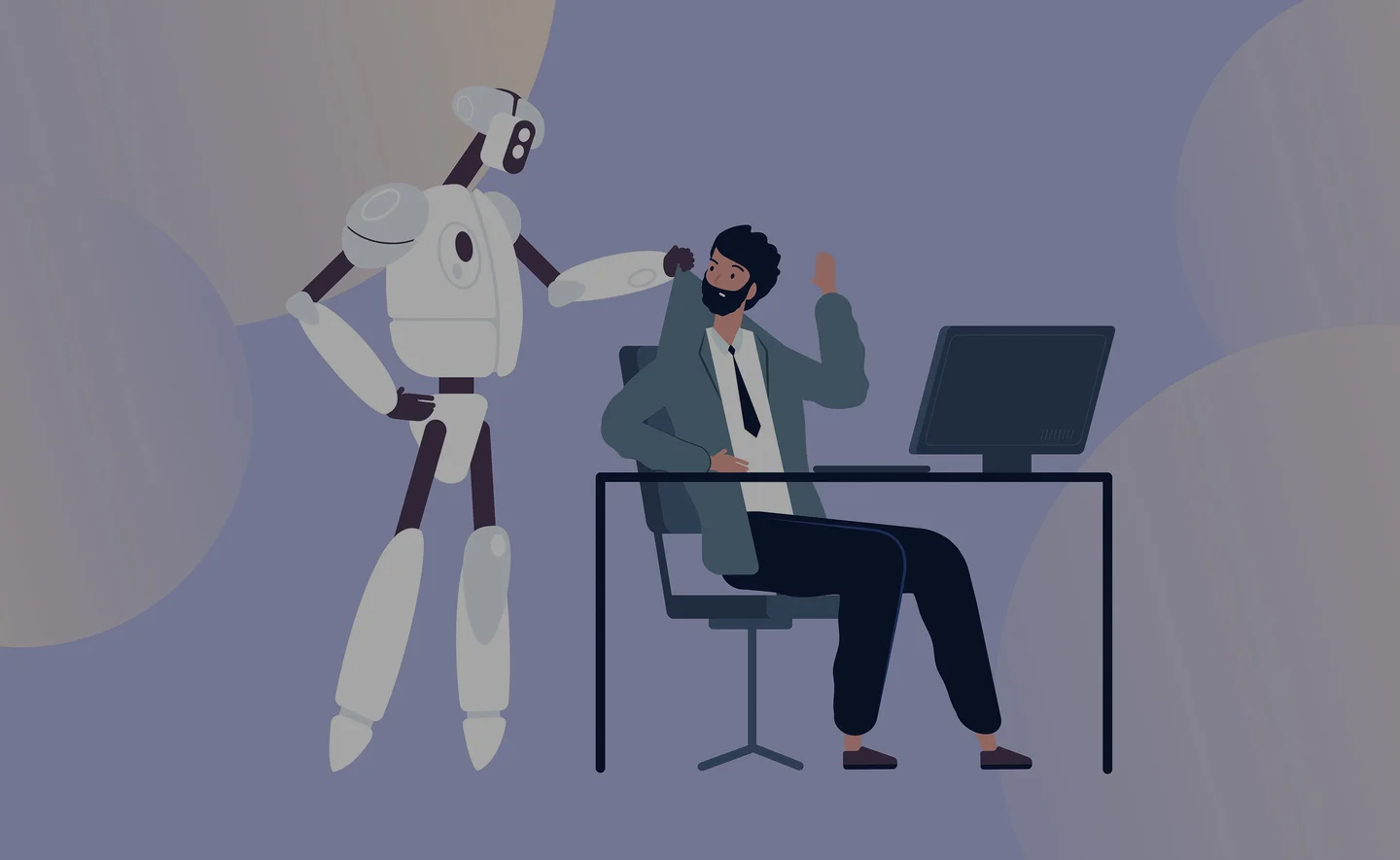
Every few months a new headline declares that AI will replace developers entirely. It won't. But it will replace developers who refuse to evolve. The real extinction event isn't AI taking your job. It's you pretending AI doesn't change what your job looks like.
If you've spent any time on tech Twitter, LinkedIn, or the darker corners of Hacker News over the past couple of years, you've encountered the take. Some variation of "developers will be obsolete by 2027" or "AI will write all code within five years" or the perennial favourite, "the last generation of human programmers is already working." It's provocative. It gets clicks. And it's wrong. But it's wrong in an interesting way that's worth unpacking, because buried under the hyperbole is a genuine transformation that developers ignore at their own risk.
Let's start with what AI can actually do right now, not in some hypothetical future, but today.
It can generate boilerplate code quickly and accurately. It can scaffold components, write test cases, suggest refactors, and produce documentation. It can translate between languages, explain unfamiliar codebases, and debug certain categories of errors faster than most humans can. These are real capabilities, and they're improving rapidly. If your primary value as a developer is the ability to write syntactically correct code that implements a well defined specification, then yes, you should be concerned. That work is being automated, and the pace of that automation is accelerating.
But here's what AI cannot do, and what it shows no meaningful signs of being able to do anytime soon. It cannot understand the business context behind a technical decision. It cannot sit in a room with a client who doesn't know what they want and help them figure it out. It cannot look at a product and identify that the real problem isn't the code but the information architecture, or the onboarding flow, or the fact that the feature shouldn't exist in the first place. It cannot make taste based decisions about what feels right in an interaction. It cannot navigate the politics of a stakeholder review. It cannot mentor a junior developer through a career defining challenge. It cannot hold the full context of a complex system in mind and make architectural decisions that will still be sound two years from now.
The gap between "writing code" and "building products" is enormous.
AI currently lives almost entirely on the code writing side of that gap. The developers who are genuinely at risk are those whose work begins and ends with translating specifications into syntax. The developers who are not at risk are those who operate at the layer above: understanding problems, designing solutions, making judgment calls, and orchestrating the entire process of turning a vague idea into a working product that humans actually want to use.
What's actually happening isn't extinction. It's compression.
The mechanical layer of development, the part that involves typing out known patterns, looking up syntax, writing repetitive tests, and scaffolding predictable structures, is getting compressed by AI tooling. This means that the human developer's time is freed up to focus on the work that requires judgment, creativity, and contextual understanding. In practice, this looks like developers who spend less time writing code from scratch and more time reviewing, architecting, designing systems, and solving the ambiguous problems that AI can't navigate alone.
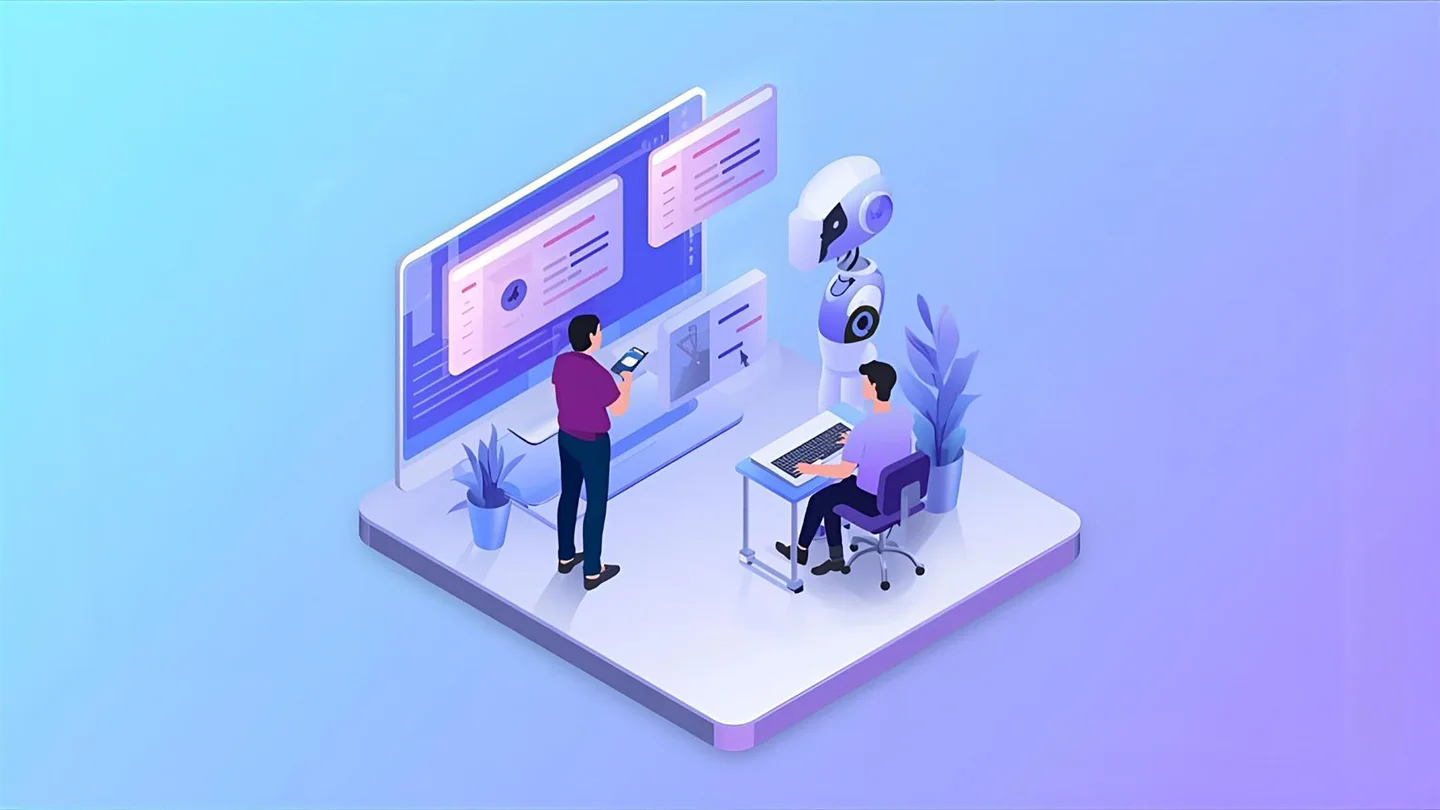
For small agencies like ours, this compression is a massive advantage. A team of three developers with strong AI tooling integration can now output work that would have required five or six developers a few years ago. Not because the AI is replacing the missing developers, but because it's handling the repetitive work that used to consume a significant portion of every developer's day. The humans on the team are doing more meaningful work per hour, which translates directly into better products, faster timelines, and healthier margins.
The developers who will thrive in this landscape are the ones who treat AI as a power tool and invest their reclaimed time in the skills that matter most:
System design, user experience thinking, client communication, performance optimization, accessibility expertise, and the ability to look at a problem from multiple angles and choose the right approach. These are fundamentally human skills that compound in value as AI handles more of the mechanical work.
The developers who will struggle are the ones who either refuse to adopt AI tooling out of stubborn resistance, or the ones who adopt it uncritically and stop developing their own judgment. Both failure modes lead to the same place: producing work that's either too slow to be competitive or too shallow to be valuable.
So no, developers aren't going extinct. But the role is evolving, and the pace of that evolution is faster than anything our industry has experienced before. The job title might stay the same, but the day to day reality of what it means to be a developer is shifting underneath us in real time. The ones who embrace that shift and adapt will find themselves more valuable than ever. The ones who don't will find that the market has moved on without them.
That's not an AI problem. That's just how every industry has always worked.
Still concerned about our impending demise?
- Stack Overflow Developer Survey 2024: AI Tools - Real data on how developers are actually using AI tools in their daily workflows. Useful for separating signal from noise.
- Kent C. Dodds: The Future of Web Development - Kent's ongoing writing on how the React ecosystem is evolving and what it means for developers. Consistently thoughtful.
- Addy Osmani: AI Assisted Engineering - Chrome engineering lead Addy Osmani's practical takes on integrating AI into real development workflows.
- Gergely Orosz: The Pragmatic Engineer - One of the most clear eyed voices in the industry on how AI is reshaping engineering teams, hiring, and career paths.
- Harvard Business Review: How AI Will Transform the Workforce - Broader perspective on AI and workforce transformation beyond just development.